
Existing Certified Grief Recovery Specialists >>
Learn to Move Beyond the Pain of Loss
An action-based, powerful, directed approach to healing from life’s deepest heartbreaks.

Corporate
Workshops
We provide grief and loss training, keynotes, and workshops for organisations around Australasia.

Become Certified to
Help Others
Grief Recovery Method teaches individuals and therapists to support clients as they overcome grief.

Get Help to Move Past the Pain of Grief
Learn the only evidence-based approach to move beyond death, divorce and other losses in your life.
You Don’t Have To Bear
The Pain Of Loss Forever
Grief is the normal and natural reaction to loss — whether that loss was caused by a death, the end of a relationship, loss of employment, or one of the significant life events that invoke this strong and overwhelming emotion.
The Grief Recovery Method is an action plan; a series of small steps that lead to the completion of the unresolved communication that is linked to the loss.
If you are struggling to move beyond the pain of grief or want to provide clients with a strategy to overcome a significant loss, you will find the solutions through our services. Book a call to find out more.
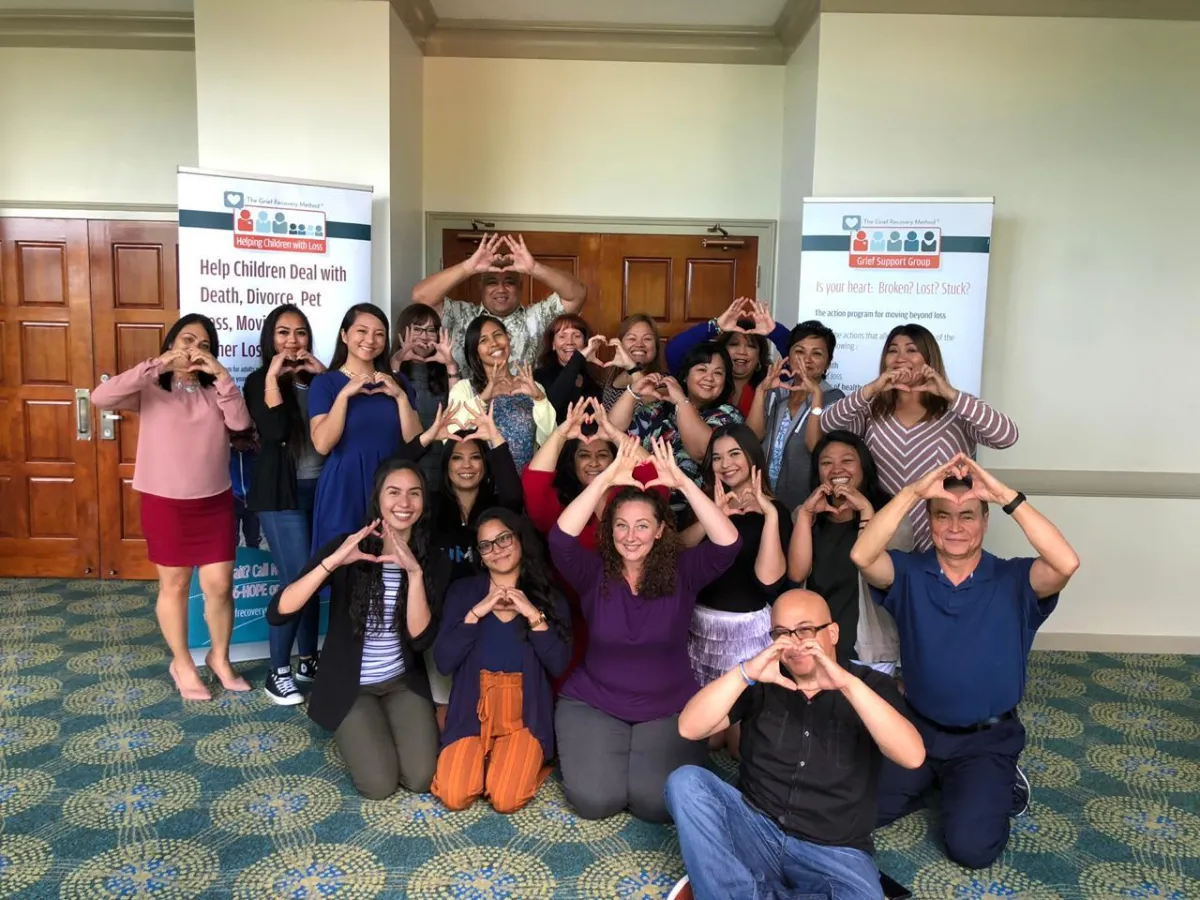
OUR STORY
Grief Recovery Institute of Australasia is an extension of a global program.
Our evidence-based, sequential method was developed to help people overcome grief.
As a result of our training, people describe having a “weight lifted from their shoulders” and a renewed ability to enjoy their life.

The Grief Loss Paradox
Grief is one of the most universal human experiences, and yet grieving is often one of the loneliest.
Everyone eventually loses someone or something significant. And yet, once the funeral, the settlement or the initial shock has passed, the world around a griever tends to move on far faster than the griever does.
This is the grief loss paradox. Something almost everyone will experience becomes something very few people feel they can talk about honestly, for very long.
Friends check in for a week or two, then quietly stop asking. Colleagues expect a return to normal function long before grief has actually resolved.
The griever is often left carrying something enormous, largely alone, precisely because grief is so common that everyone assumes someone else is checking in.

How Grief Support Has Evolved
For a long time, grief support meant waiting. Give it time, people were told, and the pain would fade on its own.
That approach has not aged well. Time alone does not complete unresolved grief. It simply allows unresolved grief to sit quietly underneath a person's daily life, sometimes for years.
The shift towards action-based recovery reframes grief entirely. Rather than a wound that simply needs time, grief is treated as something with real, learnable actions that lead to genuine completion, not just distraction or endurance.
This is a significant shift, because it gives grievers something time alone never could: a way to actively move through pain, rather than simply waiting for it to become bearable.

The Grief Recovery Method Action Plan:
How Recovery Actually Happens
The Grief Recovery Method is a structured, action-based process that helps a griever complete their relationship with a specific loss.
Completion does not mean forgetting, and it does not mean the relationship or loss stops mattering. It means being able to remember the whole relationship honestly, the good and the difficult parts both, without being overwhelmed by unresolved pain each time.
The Action Plan typically helps a griever work through:
Unspoken words, things they wish they had said, or wish they had not said
Unfulfilled hopes, dreams and expectations tied to the relationship or loss
Both the positive and the painful parts of the relationship, since most relationships include both
This is meaningfully different from simply "getting over it" or "moving on." It is a guided, structured way of finishing what was left unfinished, so grief no longer sits quietly underneath everyday life.
Supporting Someone Who Is Grieving

If someone you care about is grieving, you do not need the perfect words. You need to avoid the unhelpful patterns most of us were taught by default.
More helpful approaches include:
Acknowledging the loss directly, rather than avoiding the topic altogether
Asking open questions like "Do you want to talk about it, or would you rather I just sit with you?"
Continuing to check in well after the first few weeks, when most other support has quietly stopped
Avoiding comparisons to your own losses, even when well-intentioned
Letting them feel however they feel, without rushing them towards "moving on"
Less helpful, even if well-meaning, approaches include:
"Everything happens for a reason"
"They're in a better place now"
"At least you still have..."
"You need to stay strong"
"It's time to move on"
Presence, consistency and honesty tend to help far more than any perfectly worded sentence.
Signs Grief May Need More Support
Grief does not follow a fixed timeline, and there is no single "normal" way to experience it. That said, some signs suggest additional, guided support could genuinely help.
These include:
Feeling stuck in the same intensity of pain, months or years after the loss
Relying heavily on STERBs to avoid feeling grief at all
Significant difficulty functioning in daily life for an extended period
A loss that feels unspeakable, or one you have never told anyone about
Multiple losses that feel like they have never been properly processed
Needing support is not a sign of weakness or a sign that something is wrong with you. It is simply a sign that this particular loss deserves more than time alone.
If you are struggling significantly, please also consider reaching out to a GP, counsellor or Lifeline on 13 11 14. This guide is educational and does not replace individual professional support.

Becoming a Certified Grief Recovery Specialist
Some people move through their own grief recovery and feel called to help others do the same.
Grief Recovery Specialist training is a structured certification pathway that teaches the full method, so graduates can facilitate grief recovery support for individuals and groups in their own community or practice.
This path is often chosen by counsellors, coaches, health professionals and community leaders, as well as people whose own experience of loss and recovery has left them wanting to support others through the same process.
Frequently Asked Questions About Grief and Loss
What is grief, according to the Grief Recovery Method?
Grief is defined as the conflicting feelings caused by the end of, or change in, a familiar pattern of behaviour.
Does grief only apply to death?
No. Grief can follow any significant loss or change, including divorce, pet loss, moving, financial loss, health changes or estrangement.
What are the six myths about grief?
The six myths are: don't feel bad, replace the loss, grieve alone, just give it time, be strong for others, and keep busy.
Why doesn't the Grief Recovery Method use the five stages of grief?
The five stages were originally developed to describe the experience of facing a terminal diagnosis, not the broader experience of grieving a loss, and grief rarely follows a tidy, sequential pattern.
What are STERBs?
STERBs, or Short-Term Energy Relieving Behaviors, are coping habits like overworking, overeating or overusing alcohol that offer temporary relief but do not resolve underlying grief.
Is it normal to feel relief as well as sadness after a loss?
Yes. Conflicting feelings, such as sadness alongside relief, are a normal and expected part of grief, particularly after a complicated relationship or a long illness.
Does time heal grief on its own?
Not reliably. Without action, unresolved grief can remain just as present years or even decades later.
What does "completion" mean in grief recovery?
Completion means being able to remember a relationship or loss honestly, including both the positive and painful parts, without being overwhelmed by unresolved pain.
Is completion the same as forgetting or moving on?
No. Completion does not mean forgetting, and the loss can still matter deeply. It means the unresolved emotional weight no longer sits underneath everyday life.
What does the Grief Recovery Method Action Plan actually involve?
It typically helps a griever work through unspoken words, unfulfilled hopes and dreams, and both the positive and painful aspects of the relationship or loss.
Can grief recovery help with losses that happened a long time ago?
Yes. Unresolved grief does not have an expiry date, and recovery work can help with losses from many years earlier just as effectively.
What should I say to someone who is grieving?
Acknowledge the loss directly, ask what kind of support they need, and continue checking in well after the first few weeks.
What shouldn't I say to someone who is grieving?
Avoid phrases like "everything happens for a reason," "they're in a better place," or "it's time to move on," which can feel dismissive even when well-intentioned.
Is grief recovery done alone or with support?
Grief Recovery Method programs are typically facilitated by a trained Grief Recovery Specialist, either one-on-one or in a small group.
Can children go through grief recovery too?
Yes. There are grief recovery formats specifically designed to support children through loss.
Does pet loss count as "real" grief?
Yes. Pet loss disrupts a genuinely familiar pattern of behaviour and is fully recognised as a legitimate form of grief.
How long does grief recovery take?
It varies by person and loss, but recovery work is generally structured and time-defined, rather than open-ended waiting.
What if I have never told anyone about a particular loss?
That is more common than most people realise, and it is often exactly the kind of loss that benefits most from guided, confidential support.
Can I experience grief for something that hasn't fully happened yet, like a diagnosis?
Yes. Anticipatory grief, related to an expected future loss, is a recognised and valid experience.
Is it possible to grieve someone who is still alive?
Yes. Estrangement, addiction or significant changes in a relationship can all trigger grief, even when the person is still living.
What is the difference between grieving and being depressed?
Grief is a response to a specific loss and often includes moments of relief or connection alongside pain, while clinical depression is a broader condition. If you are unsure, it is worth discussing with a GP or mental health professional.
How do I know if I need professional grief support?
Signs include feeling stuck at the same intensity of pain over time, relying heavily on coping habits to avoid feeling grief, or significant ongoing difficulty functioning day to day.
What is a Grief Recovery Specialist?
A Grief Recovery Specialist is someone certified through structured training to facilitate the Grief Recovery Method with individuals or groups.
Who becomes a Grief Recovery Specialist?
Many are counsellors, coaches or health professionals, alongside people whose own experience of grief and recovery inspired them to support others through the same process.
Where can I access grief recovery support or training?
Grief Recovery Institute Australasia offers grief education, recovery programs and Grief Recovery Specialist certification training.
Download Guide for Loss
ENTER YOUR NAME & EMAIL ADDRESS TO DOWNLOAD

TESTIMONIALS
Hear from Australasianss who have participated in the Grief Recovery Method training.
Loss of a Child
Grieving the Loss of a Child
Grieving the Loss of Family
Grief from Childhood

Why Choose Grief Recovery Method?
A unique program that is more than counselling

46-Year History
Grief Recovery Method has been shared for almost 50 years.

Evidence-Based
You won’t find any other evidence-based grief recovery method training.

Step-by-Step Program
Go beyond understanding and take action to move beyond the pain of loss.

Improve Your Therapeutic Services
Grief Recovery Method has been shared for almost 50 years.

Caring, Authentic
Team
You won’t find any other evidence-based grief recovery method training.

Learn to Live
Go beyond understanding and take action to move beyond the pain of loss.
From Our Blog
You don’t have to feel alone.

Do You Feel Overwhelmed?

Since I learned about the Grief Recovery Method, I’ve found myself looking up more words in the dictionary to see what they really mean. I’ve found that many times, they don’t mean what I thought they did, and, in fact, they make more sense when I understand them better.
I recently looked up the word overwhelmed because I hear a lot of people saying they feel overwhelmed in 2020 and I do too.
The first definition of overwhelmed I found was this –
“Very great in number, effect, or force. Used to describe something that is so confusing, difficult, etc., that you feel unable to do it.”
BINGO! That’s exactly it.
So many things currently burden our hearts:
a worldwide pandemic
various requirements for “social distancing”
virtual school and meetings
businesses closing or struggling
natural disaster
the very real possibility of not being able to gather for the fall and winter holidays
elderly parents sequestered in their living facilities
Anyone of them alone would cause us grief – which is the normal and natural response to change or loss of any kind.
Having a great effect or force – that’s true too, isn’t it? All of our current issues are also confusing and difficult. The cumulative effects on each of us certainly have the ability to weigh us down. If you’re familiar with the “backpack” analogy we use in our Grief Recovery Method classes – that we carry our losses around in our backpacks like stones, a rock, or sometimes a boulder. Eventually, the straps on the backpack seem to break under the weight. In many of these circumstances, we may feel like we’re forced to carry these rocks in our backpacks. What’s worse is that everyone we know has their own weighty backpack too.
If you’re feeling overwhelmed, I encourage you to use the Grief Recovery Method. The Grief Recovery Method is an evidence-based, action-oriented, time-proven approach to identify and get complete with the feelings that keep you stuck. Sometimes, just naming and talking about your feelings can relieve some of the weight in your backpack. It can help you to identify and deliver important emotional communications in an honest and safe way, which ultimately unloads some of what overwhelms us.
To find a trained Grief Recovery Method Specialist in your area or connect with one of our Advanced Specialists to work with you in a live, online format, visit our website at www.griefrecoverymethod.com. If you’d like to have a part in lifting the overwhelming weight from others in your community, visit that same website to learn how you can train to be one of our Grief Recovery Method Specialists soon!
Are you grieving and interested in knowing more?

Ready For Change?
Start your journey today.

Step 1
Book A Free Call
Contact us to find out how we can help you as an individual or a therapist.

Step 2
Schedule Your Training
Learn how to overcome grief and begin to heal yourself or others.

Step 3
Move Forward
Finally feel like you know what to do when it comes to dealing with loss.
Lift the Weight of Grief
Nobody should have to live with the permanent pain of grief and loss.
Learn the Grief Recovery Method today.



